
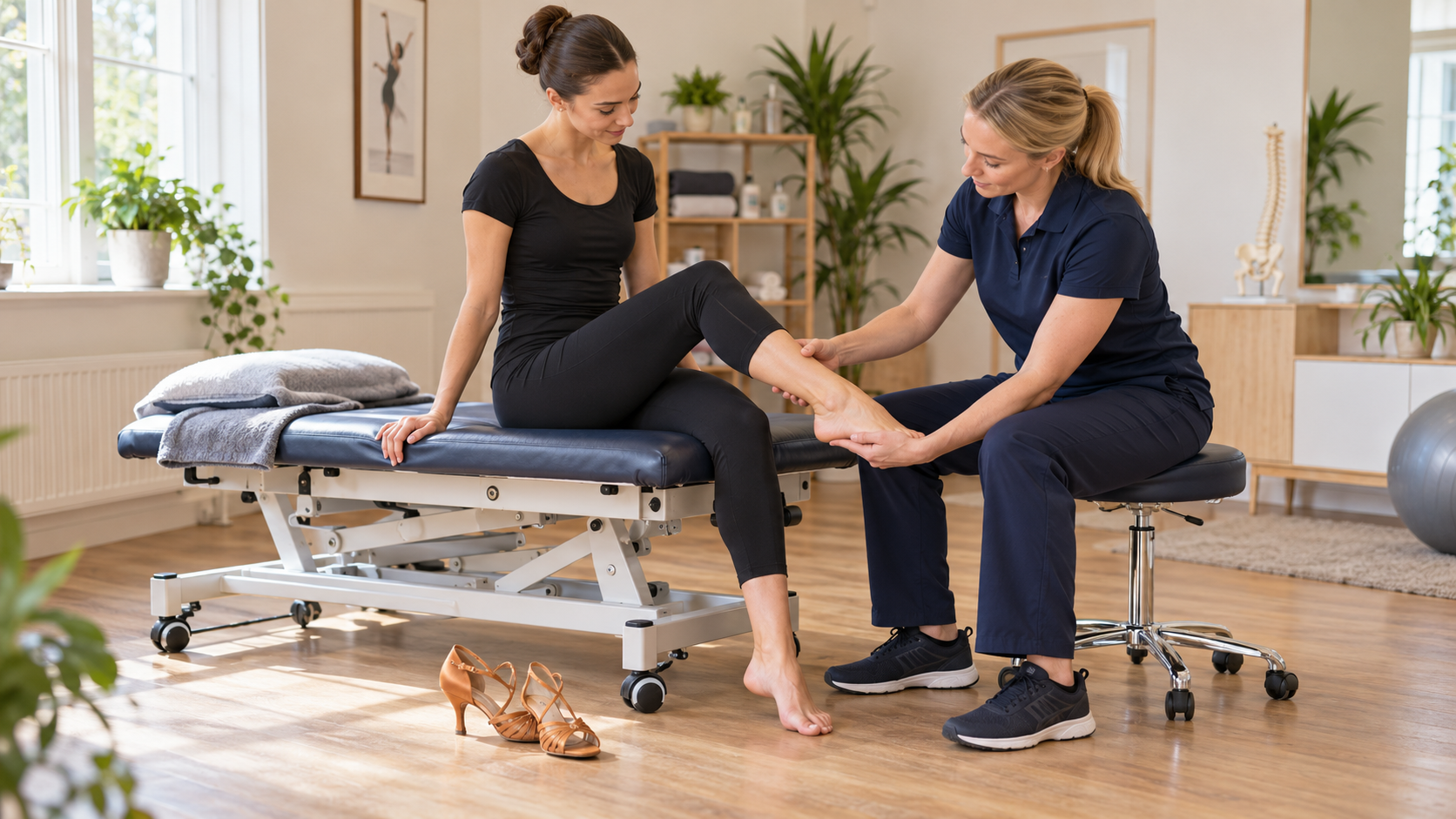
Injury Recovery Treatments for Dancers: Physiotherapy, Osteopathy and More
Dancing brings music, movement and enjoyment together, but an injury can make even familiar steps feel difficult. Whether you dance socially, take private lessons or train for competitions, understanding your treatment options can help you make informed decisions about recovery.
At Zoltan’s Ballroom and Latin Dancing Lessons Westminster, our focus is helping people enjoy Ballroom and Latin dance. Clinical assessment and rehabilitation belong with qualified healthcare professionals. Once you have appropriate advice, talking to your dance teacher about any restrictions is a useful part of planning your return.
From physiotherapy and osteopathy to podiatry and exercise rehabilitation, several approaches may help. The right choice depends on the injury, your symptoms and what you need to get back to doing.
Understanding dance injuries before choosing treatment
A sudden twist or awkward step may cause a sprain or strain. Other problems develop gradually, such as Achilles tendon pain or persistent discomfort beneath the foot. These conditions need different management, even when the pain seems to be in a similar place.
Ballroom and Latin dancers should explain the movements involved in their dancing when seeking help. For example, does discomfort appear during a pivot, when rising onto the balls of the feet, while holding a Ballroom frame or after repeated Jive steps? Details about your shoes, practice schedule and recent changes can also help a clinician understand the problem.
Avoid choosing a treatment purely because another dancer found it helpful. A clear assessment gives treatment a purpose and helps identify when further investigation is needed.
Physiotherapy for dance injuries
Physiotherapy can help reduce pain and improve movement following muscle, joint and sports injuries. An appointment usually involves discussing your symptoms and examining how you move before agreeing a treatment plan.
Treatment may combine exercises, advice about managing activity and hands-on techniques. Regularly completing the prescribed exercises between appointments is an important part of rehabilitation. [1]
For a dancer, useful goals to discuss with a physiotherapist include:
Regaining comfortable movement for the steps you practise.
Rebuilding strength and endurance.
Improving balance and control.
Understanding how much practice is appropriate.
Preparing for a gradual return to lessons.
A physiotherapist with experience of dancers or sports rehabilitation may be particularly helpful when translating everyday recovery into the demands of dancing.
Osteopathy for dancers
Osteopathy is another option for assessing and managing certain muscle and joint problems. An osteopath will ask about your health and symptoms, assess you and explain their findings before discussing suitable treatment.
Care may involve hands-on techniques, such as soft tissue work and joint mobilisation, alongside exercise and self-management advice. Your osteopath should explain the potential benefits and risks, obtain your consent and refer you elsewhere when appropriate. [2]
For dancers, an appointment can be an opportunity to discuss discomfort during particular movements and how this affects practice. However, osteopathy is not appropriate for every injury, and hands-on treatment should not be presented as a guaranteed way to speed up healing.
For low back pain, NICE recommends considering manual therapy only within a treatment package that includes exercise. This supports an approach in which hands-on care complements active rehabilitation. [3]
Choose an osteopath registered with the General Osteopathic Council, for example Andrew Fung Osteopath in Hackney, East London.
Sports massage and soft tissue treatment
Sports massage may be included within a physiotherapy or osteopathy plan to help manage symptoms and make movement more comfortable. For some dancers, this can be useful alongside rehabilitation exercises.
It is important to distinguish temporary symptom relief from recovery of an injured structure. Feeling more relaxed after a massage does not, by itself, mean an ankle, tendon or muscle is ready for a full lesson.
Deep massage is also unsuitable for some recent injuries. NHS advice recommends avoiding massage during the first couple of days after a sprain or strain because it may worsen swelling. If you have new pain, bruising or swelling, seek advice before booking treatment. [1, 4]
Podiatry, footwear advice and insoles
Foot and ankle discomfort can affect every part of a dance lesson. A musculoskeletal podiatrist assesses problems involving the feet and lower limbs, including movement, loading and footwear.
Depending on the diagnosis, treatment may involve exercises, footwear changes, padding or insoles. Insoles are useful for some conditions, but they need to be appropriate for the individual and fit correctly within the shoe. [5]
Bring your dance shoes to an appointment and explain how you use them. Advice that works for everyday walking footwear may need adapting for the fit and demands of Ballroom or Latin shoes. Ask your clinician whether a temporary change in footwear would be appropriate during recovery.
Exercise rehabilitation and progressive strengthening
Recovery often involves rebuilding the physical abilities needed for dancing. Rehabilitation may address strength, movement, endurance and balance, with exercises progressing as you recover. Research on rehabilitation in ballet dancers highlights these components as part of preparing for a return to dance, although the programme must be adapted to each dancer and style. [6]
For Ballroom and Latin dancers, ask your clinician how your programme will prepare you for weight transfers, turns, changes of direction and sustained practice.
Some programmes may include adapted Pilates-based exercises or other supervised conditioning. The exercises should be selected for your injury and recovery stage. A general fitness class is not automatically suitable simply because it is described as gentle.
Your clinician should explain which symptoms are acceptable during exercise, when to reduce the load and when you should seek another assessment.
Hydrotherapy and exercise in water
Hydrotherapy, which involves exercise in warm water, is another treatment sometimes used within physiotherapy. [1]
It may be worth discussing if your clinician thinks a pool-based programme would suit your condition. Ask what it is intended to achieve and how it fits with your wider rehabilitation.
Returning to the dance floor will still require preparation for the specific movements and demands of dancing. Pool sessions should therefore have a clear role within your recovery plan.
Acupuncture for selected pain conditions
Acupuncture is sometimes offered to help manage particular pain conditions. Its suitability depends on the diagnosis, and evidence for one condition should not be assumed to apply to every dance injury.
The NHS notes that acupuncture may be available for some forms of long-term pain. In contrast, NICE advises against offering it for low back pain with or without sciatica. [3, 7]
If considering acupuncture, ask a suitably qualified practitioner about the evidence for your condition, likely benefits and risks. Reduced pain should not be taken as proof that an injured tissue has healed or that full dancing is safe.
Shockwave therapy for persistent tendon or heel pain
Shockwave therapy may be considered for certain persistent conditions, including Achilles tendinopathy and plantar heel pain, when initial treatments have not helped enough.
It uses a device to deliver mechanical pressure waves through the skin. It is not a general treatment for all dance injuries, and results vary. A clinician should assess whether it is appropriate and explain any restrictions on activity around treatment. [8]
If it is offered, ask how it fits alongside your exercise programme and what improvement would justify continuing.
When a dance injury needs medical attention
Seek urgent advice from NHS 111 if an injury causes severe or worsening pain, substantial swelling, or difficulty bearing weight.
Attend A&E for signs such as a visibly deformed limb, numbness or an injured area that becomes blue, grey or cold. These symptoms may indicate a more serious injury. [4]
Persistent or recurring pain also deserves assessment. A clinician can decide whether you need imaging, specialist advice or a different treatment plan. Repeatedly trying new treatments without reviewing the diagnosis can delay appropriate care.
Returning to Ballroom and Latin dancing
Being comfortable in everyday life is encouraging, but dancing may ask more of your body. Your return should follow your clinician’s advice and reflect the movements you need to perform.
Useful questions to ask include:
Which steps or movements can I practise now?
How long should my first sessions be?
Should I temporarily avoid particular turns, positions or faster dances?
What symptoms during or after practice mean I should reduce activity?
How will we decide when I am ready for a full lesson?
Share the resulting guidance with your teacher before restarting. For example, if your clinician recommends limiting a particular movement, discuss whether your lesson can be adapted within that restriction. Avoid setting a return date solely around a competition, social event or wedding.
Choosing support for your recovery
Look for a clinician who explains the diagnosis, sets practical goals and reviews progress. Physiotherapists and podiatrists can be checked on the Health and Care Professions Council register; osteopaths should appear on the General Osteopathic Council register. [2, 9]
Ask how each proposed treatment will help, what you should do between appointments and when the plan will be reconsidered if symptoms persist.
At Zoltan’s Ballroom and Latin Dancing Lessons Westminster, we offer private tuition for individuals and couples, including wedding dance lessons. When your healthcare professional advises that you can return, contact us to discuss your dance goals and any recommended limitations.
Find out more about Ballroom and Latin dance lessons at Zoltan’s.
This article provides general information and does not replace an individual assessment or treatment plan from a qualified healthcare professional.
Sources
General Osteopathic Council: What to expect at your appointment
Bradford District Care NHS Foundation Trust: Foot, toe, ankle and lower limb aches and pains
Clinical report: Rehabilitation of foot and ankle injuries in ballet dancers
Bradford District Care NHS Foundation Trust: Shockwave therapy information